
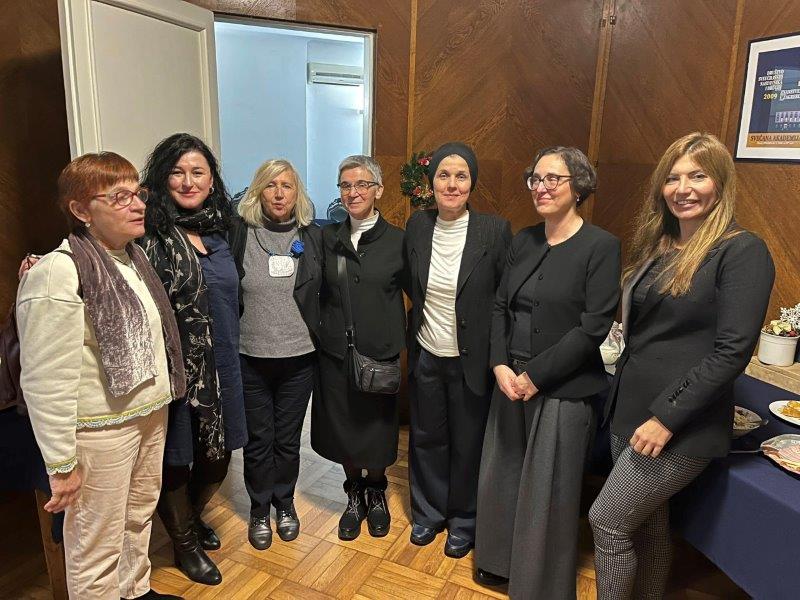
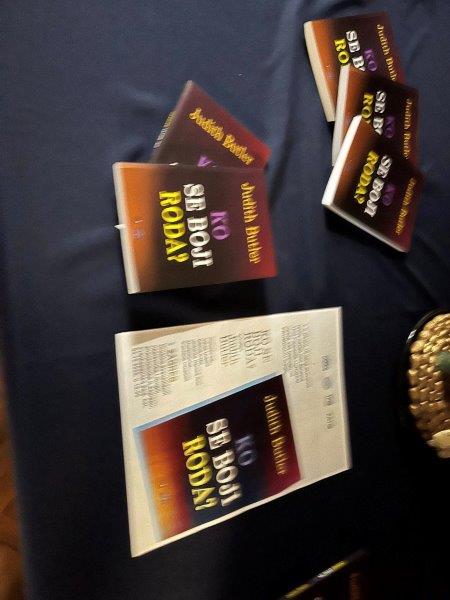
The promotion of Judith Butler’s book Who’s Afraid of Gender? was held in Zagreb on 4 December 2025, gathering distinguished experts in law, sociology and religion who analyzed the broader social significance of the book and the increasing impact of anti-gender movements in the region and Europe. Speakers included Josip Hrgić, Advisor in the Office of the Ombudsperson for Gender Equality of Croatia, Prof. Dr. Biljana Kašić, and Dr. Jadranka Rebeka Anić, with the event moderated by Prof. Dr. Snježana Vasiljević. All participants highlighted the importance of retelling the story of gender in a clear, interdisciplinary and well-argued manner in the face of rising anti-gender mobilizations.
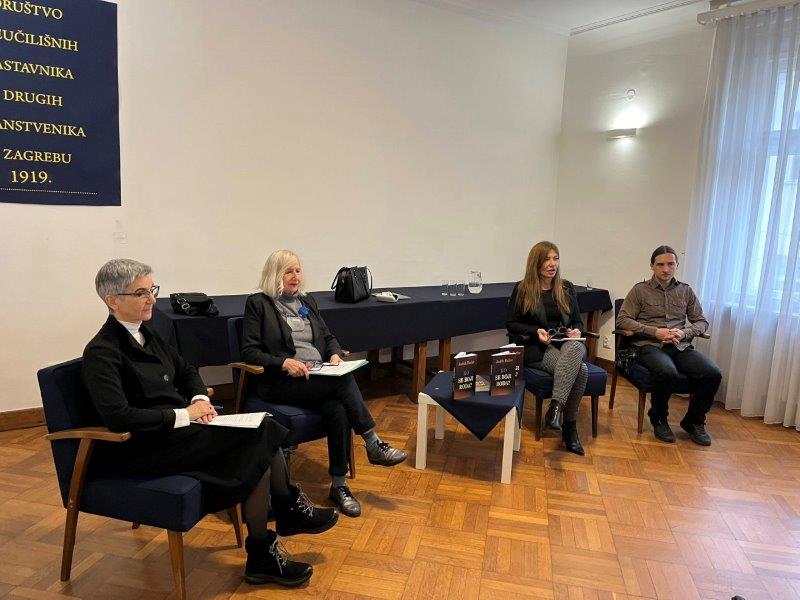
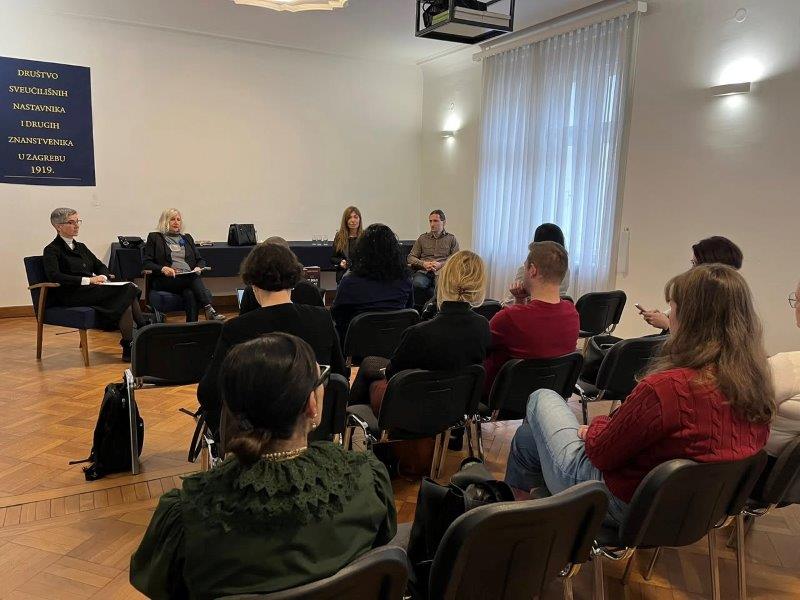
Josip Hrgić reflected on the terminological ambiguities surrounding the concepts of sex and gender, ambiguities that are increasingly weaponized against equality. Speaking from an institutional perspective, he presented insights from the Office of the Ombudsperson regarding the implementation of gender equality laws. He emphasized that the legal framework in the Republic of Croatia is broadly constructed and formally well defined, but that it is through judicial practice that it is further shaped and clarified—precisely where the greatest challenges emerge. A particular issue is terminological inconsistency, which anti-gender actors instrumentalize to undermine gender equality. Hrgić concluded: “Some institutions genuinely struggle with how to position themselves in relation to gender issues, and so the Office often acts as a corrective mechanism… Civic literacy is essential: people must know whom to turn to and where to seek protection.”
Prof. Dr. Biljana Kašić described anti-gender movements as a new form of totalitarianism, stressing that Butler’s book appears at a crucial moment. It not only diagnoses contemporary polarizations but also provides argued strategies for responding to the multiple and synchronized attacks of anti-gender actors aiming to return society to pre-modern and rigidly patriarchal norms. Kašić praised the fact that the book was translated and published only a year after its original release in 2024, adding that “this book investigates the anti-gender phenomenon almost like a detective, using historical, sociological and humanistic analysis to dismantle it to its foundations.”
She warned that anti-gender movements spread anxiety, fear and censorship; derogate and erase women’s rights and LGBTIQ rights; use mimicry and “conservative enlightenment” as persuasive strategies; work toward the repatriarchalization of society; and generate a political culture of exhaustion in an era of “post-truth,” where ignorance becomes desirable. “In anti-gender narratives, gender becomes a demonic construct, a metaphorical site of all fears. It is a form of new totalitarianism. We must confront it with arguments, and this book provides them,” Kašić concluded.
Dr. Jadranka Rebeka Anić spoke about theological inertia and the construction of “gender ideology,” noting that church structures often exhibit intellectual rigidity and resistance to change, including to developments related to gender equality. She highlighted that Judith Butler, in the book, offers three important approaches to understanding anti-gender narratives: a) analyzing how theologians misinterpret gender and why these misinterpretations occur; b) investigating the historical development of the anti-gender movement, both in secular and religious discourse; c) understanding the anti-gender movement as a psychosocial phenomenon, as a set of fantasmatic scenes. This means understanding how contemporary fears and anxieties linked to existential challenges are transformed and crystallized into a monolith called “gender ideology,” and how these fears are manipulated for political purposes.
Argued engagement with the anti-gender movement is almost impossible, she noted, because of the intellectual arrogance of its proponents, their refusal to read contemporary literature, and the reduction of complex social issues to populist, “common-sense” solutions. Anić emphasized that gender is a complex category encompassing power relations, social roles, and the performative dimensions of identity.
All speakers agreed that, in a time of expanding anti-gender movements, it is crucial to retell the story of gender, clearly, interdisciplinarily and through strong argumentation. The book Who’s Afraid of Gender? provides precisely such a framework: it exposes manipulations, offers theoretical tools, and invites a responsible and informed public dialogue.
The promotion concluded with the message that attacks on gender are not merely attacks on theoretical concepts, but direct attacks on freedom, social equality, and the human rights of all citizens. Understanding gender therefore becomes essential for safeguarding democratic values.
