
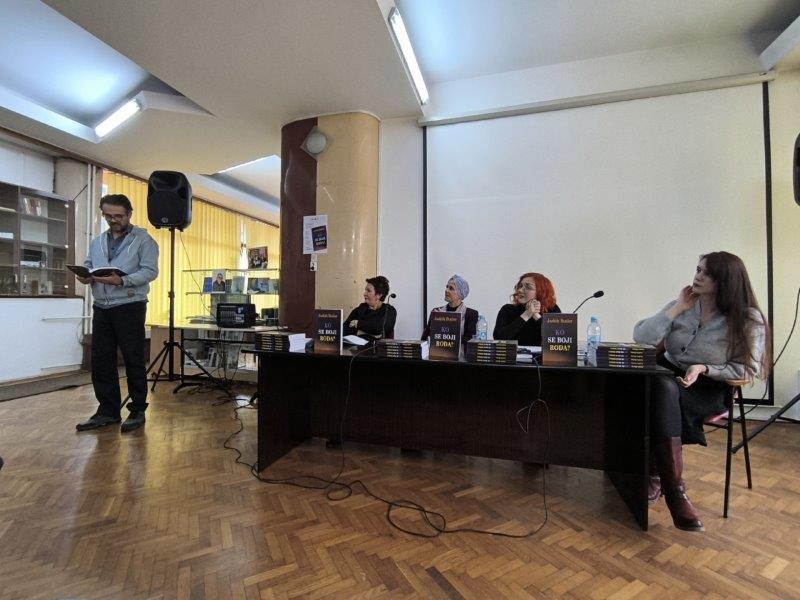
On 3 December 2025, TPO Foundation, in cooperation with the University of Zenica – Faculty of Philosophy, held the fourth promotion of Judith Butler’s book Who’s Afraid of Gender? at the Zenica City Library. The event is part of the “16 Days of Activism Against Gender-Based Violence” campaign. The promotion was moderated by Azemina Krehić-Halilović, and the speakers were Professors Edisa Gazetić, Zilka Spahić Šiljak and MA Larisa Mahmić, while Professor Hazim Begagić read excerpts from the book. It was concluded that gender itself is not the problem; the real problem are global anti-gender trends that spread fear and panic in order to abolish freedom and render democracy meaningless.
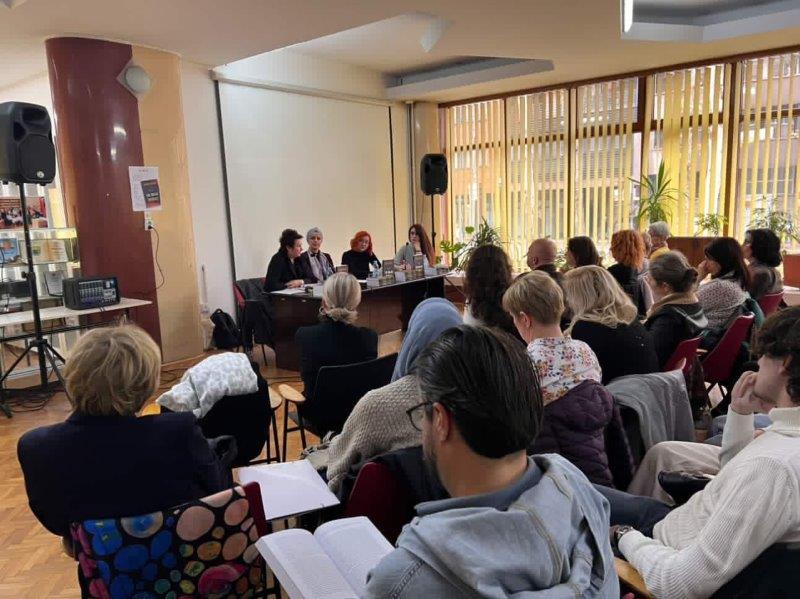

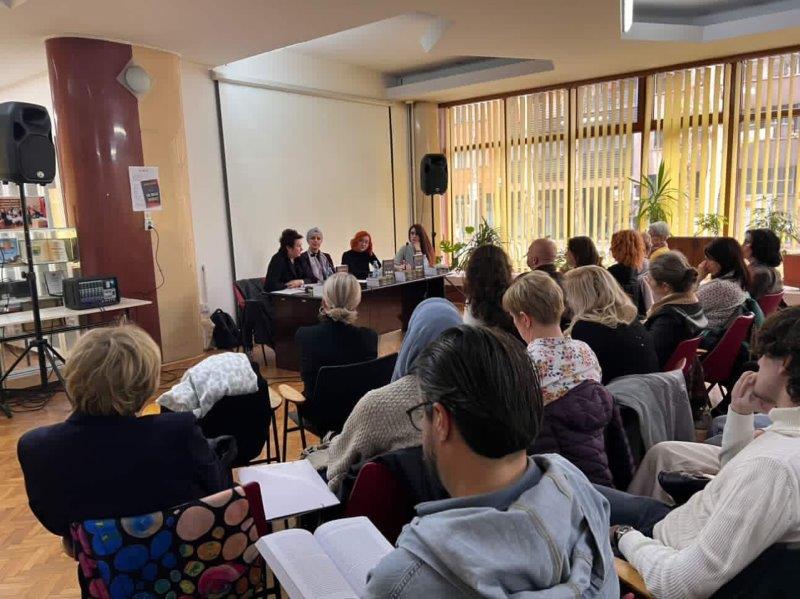
Professor Zilka Spahić Šiljak drew a comparison between anti-gender discourses and Islamophobic discourses, showing which strategies and mechanisms of control they use to sow fear and panic among ordinary people about the so-called “gender ideology”. “Gender ideology” becomes a convenient enemy, portrayed as a threat to the “ordinary person”, to the nation, the family and children. In her conclusion she underlined:
“Populist parties build support by presenting themselves as defenders of tradition and protectors of ‘normal life’. These discourses emerge from the same political laboratories, feed on the same fears, use the same strategies of moral panic, and target similar groups (women, minorities, academia, civil society), thereby reinforcing authoritarian and patriarchal structures. They are neither accidental nor spontaneous: they are engineered discourses that serve to maintain power.”
Professor Edisa Gazetić spoke about politics of the body and women’s reproductive rights, stressing that these rights were guaranteed to women already in Yugoslavia, and that anti-gender populists now seek to revoke these rights and control women’s bodies. “Women are expected to give birth to the nation’s soldiers, and their lives do not matter – only the lives of the unborn, as populists in Poland have shown in the cases of two women who died because doctors refused to help them,” Professor Gazetić concluded. She went on to discuss the “tradwife” trend – traditional wives who, through viral online content, attract millions of women worldwide with messages that they should embrace traditional roles and devote themselves to husband and children, as their recipe for happiness. At the same time, these influencers earn excellent money, while advising other women not to work but to stay at home.
Larisa Mahmić addressed the question of language, which Butler discusses in detail in chapter 10 of the book, explaining why terminology and the concept of gender are so important. Everything begins with language, and language has the power to make something visible, important and recognized – or to conceal and marginalize it, depending on how we use it, Mahmić explained. The concept of gender is crucial because we need to distinguish between sex as a biological category and gender as a social construct.
