
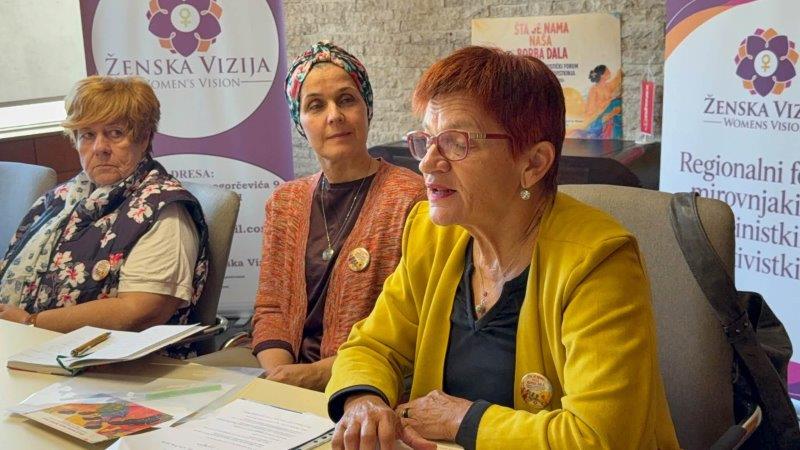
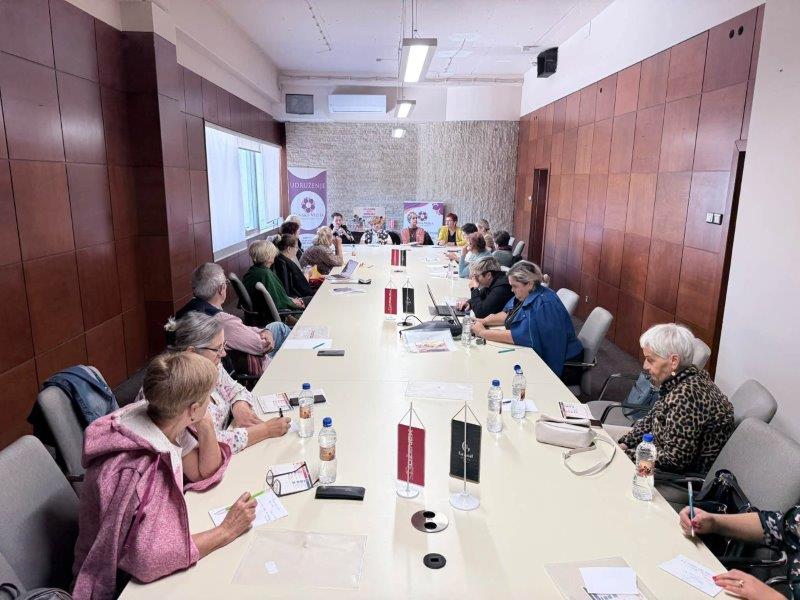
“It is not enough to see injustice – we must decide what we will do when we see it,” said Prof. Dr. Zilka Spahić Šiljak at the Regional Feminist Forum, held on October 2, 2026, in Tuzla and organized by the Women’s Vision Association.
Speaking about her own activist journey, Spahić Šiljak recalled that her struggle did not begin in theory, but through direct encounters with women whose lives had been devastated by war, violence, and injustice. Those experiences taught her that knowledge cannot be separated from responsibility toward the society in which we live.
One of the key aims of her work has been to help create a society in which a woman does not have to choose between having a voice and belonging, faith and freedom, family and her own dignity. Legal equality, she stressed, is not enough if it is not felt in women’s everyday lives.
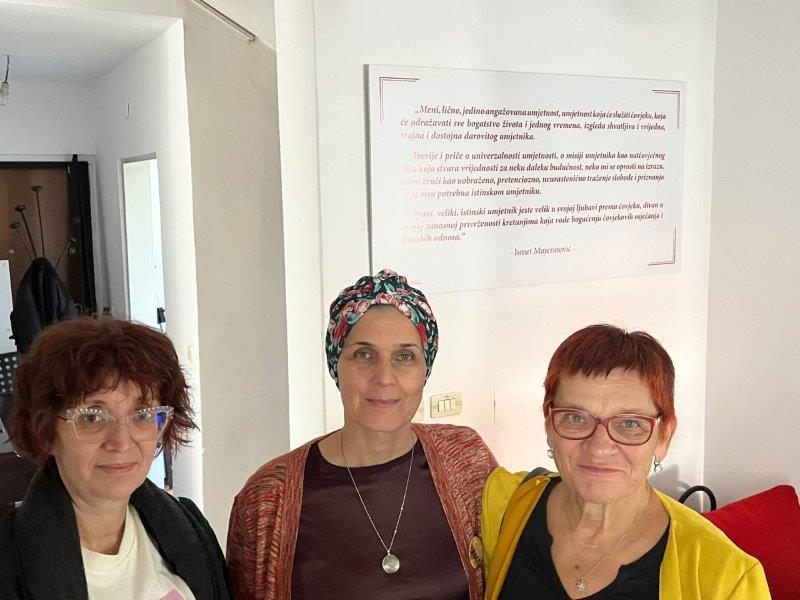
“It is not enough to open the door. We need to change the space women are entering.”
Reflecting on the results of decades of work, she highlighted changes that have gone beyond individual projects and events and have become part of institutions and educational processes: gender action plans and gender resource centers at universities, education for peace and global ethics in schools, and the FER School, which has opened a space for serious dialogue between feminism and religion.
“Success is not when people listen to you. Success is when something continues to live after you are no longer in the room.”
She paid particular attention to the resistance faced by women who attempt to transform social and institutional patterns. Resistance, she warned, does not always come in the form of an explicit “no.” Sometimes it is even more powerful when expressed through seemingly moderate messages such as: “This is not the right time,” “We are not ready yet,” or “Let us not go too far.”
Such engagement also comes at a personal cost – from misunderstanding and labeling to closed doors, isolation, and exclusion. For women who simultaneously speak from feminist and religious perspectives, the position is even more complex: for some, they are “too feminist,” while for others, “too religious.”
“I have learned that it is far more costly to spend your whole life remaining silent about something you know is unjust.”
Spahić Šiljak also pointed to a paradox of women’s activism: women have often been the first to connect people, heal the wounds of war, build peace, volunteer, and organize communities, yet they have remained on the margins when political and institutional power was being distributed.
“Women have often carried the burden of change, while others took the credit.”
One of the Forum’s key messages concerned the fragility of rights that have already been won. Equality has not become irreversible, and contemporary patriarchy does not always appear in familiar forms. It may return through nationalist and religious narratives, appeals to “family values,” as well as through new technologies and algorithms that reproduce old stereotypes.
For this reason, the feminist movement today is not only fighting to win new rights, but also to preserve what previous generations already fought for. At a time when militarism, authoritarianism, and anti-feminist politics are once again becoming normalized, professot Spahić Šiljak emphasized the need for solidarity that crosses generational, class, religious, and identity boundaries.
“A feminism that speaks only to those who already agree with it will not change society.”
At the end, she addressed several messages to younger generations of activists: do not wait for permission to act, do not spend all your energy trying to be liked by everyone, and do not forget other women when you reach positions of power.
At the same time, she encouraged them not to think that feminist struggle begins with their own generation, but to learn about the women who came before them – their achievements, their mistakes, and the struggles they were unable to complete.
“Find the women who walked before you. Learn what they fought for and won, and what they were unable to finish. And do not forget one another when you reach positions of power”, concluded prof. Spahić Šiljak.
