

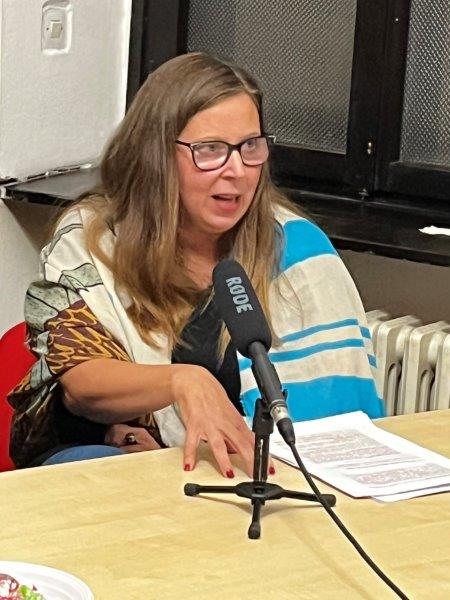
“If we accept that we are interdependent, then care is no longer merely a private or individual virtue,” said Prof. Dr. Anja Zalta, who was the guest speaker at the third roundtable held at the IMIC Zajedno Centre in Sarajevo on September 22, 2026. Moderated by Nikola Vučić, Prof. Zalta spoke about ecofeminism, different forms of resistance, and the need to rethink the relationship between humans, nature, and society.
Speaking about various examples of resistance around the world, Prof. Dr. Zalta particularly highlighted struggles over seed governance, community feminism in Honduras, the landless workers’ movement in India, as well as movements opposing deforestation. The Chipko movement in India, known for its nonviolent resistance to tree cutting, was also mentioned as an example of connecting environmental protection, community, and social responsibility.
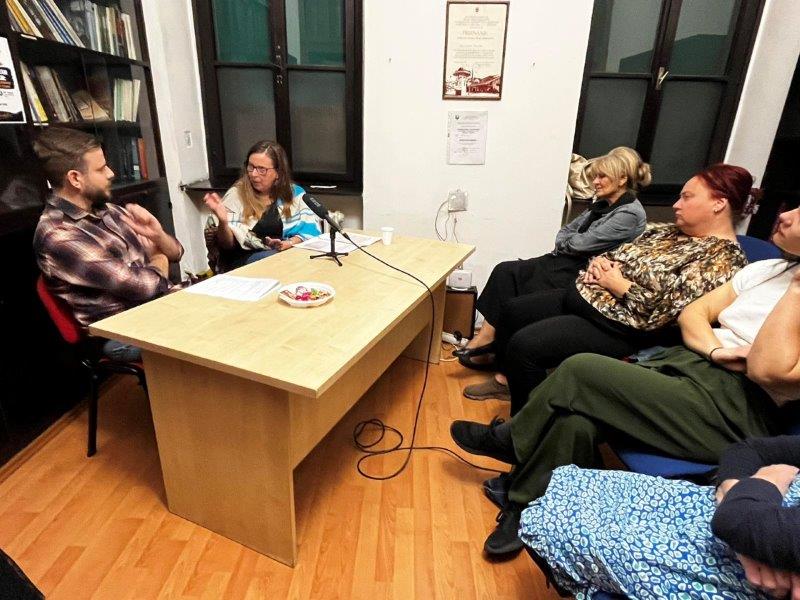
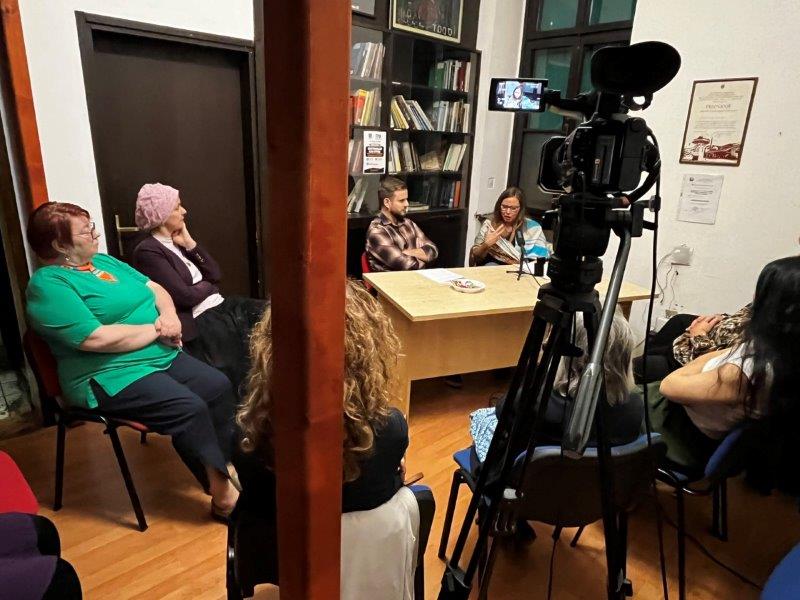
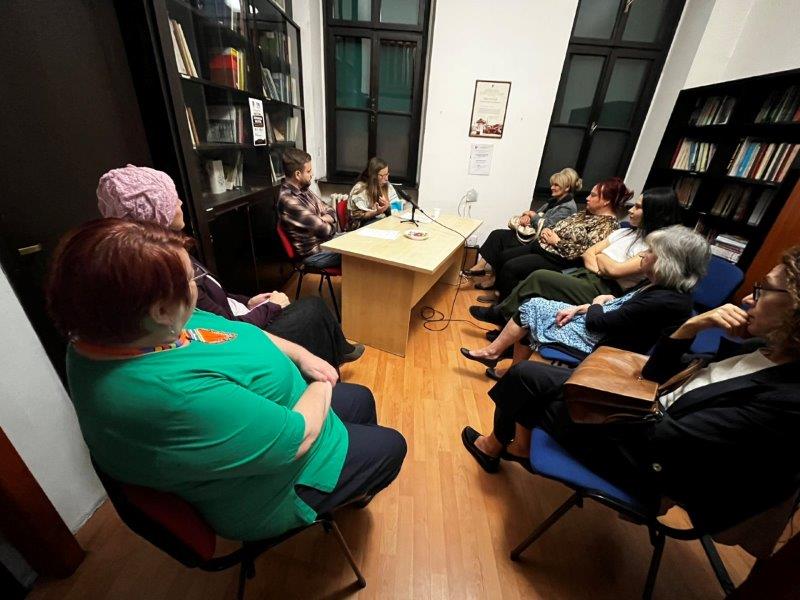
The discussion also addressed new legal approaches to environmental protection. Belgium was cited as an example, having introduced ecocide as a criminal offence in 2024, thereby bringing the issue of severe environmental destruction more directly into the legal and political sphere.
A central place in the presentation was given to the idea of the interdependence of humans and nature. Zalta referred to Asian philosophical traditions that do not view human beings as entirely separate and autonomous entities, but rather as part of a broader web of life. In this context, the concept of the “non-self” was discussed, challenging the idea of a completely separate and self-sufficient “self.” She also referred to Jainism, which contains a strong awareness of life and living beings in different forms of existence. The idea that life is present and worthy of respect is closely linked to the principle of ahimsa – nonviolence.
One of the important questions raised during the discussion was: Can care be a political act? If we accept that we are interdependent, then care is no longer merely a private or individual virtue. It becomes a social and political responsibility. Caring for others, for the community, for nature, and for future generations means questioning relations of power and the ways in which we organize society. In this sense, the ethics of care becomes an important part of ecofeminist thinking. Care does not imply passivity or withdrawal from public space. On the contrary, it can represent a way of transforming the “hard lines” of hierarchy, domination, and violence by creating relationships grounded in interdependence, responsibility, and nonviolence.
The roundtable with Anja Zalta thus opened a space for reflecting on ecofeminism not only as a theoretical approach, but also as a practice of resistance, solidarity, and the creation of different relationships with people, nature, and the world in which we live.
