
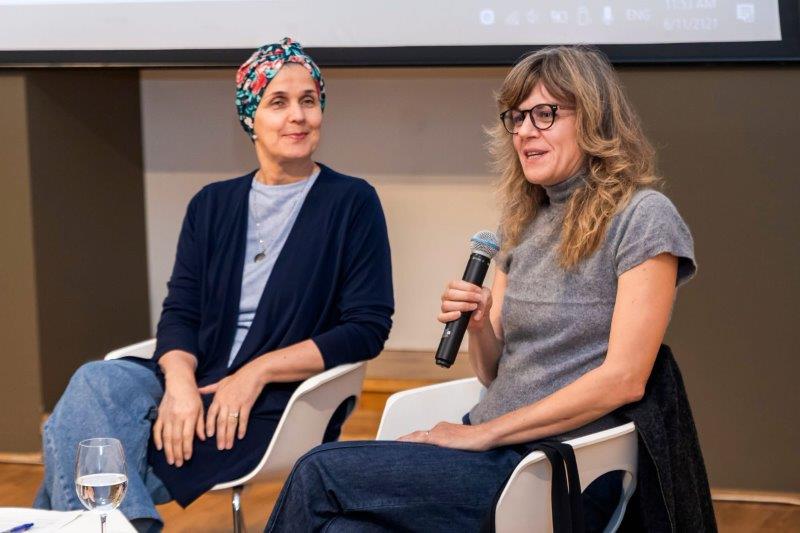
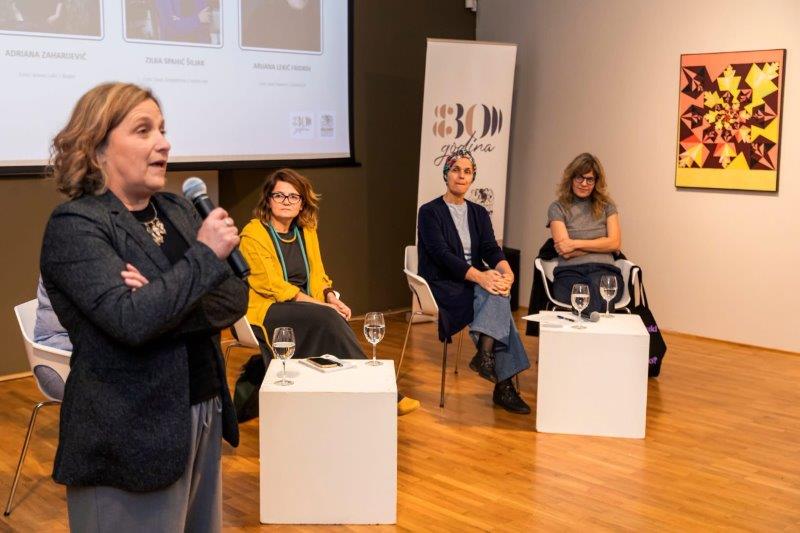
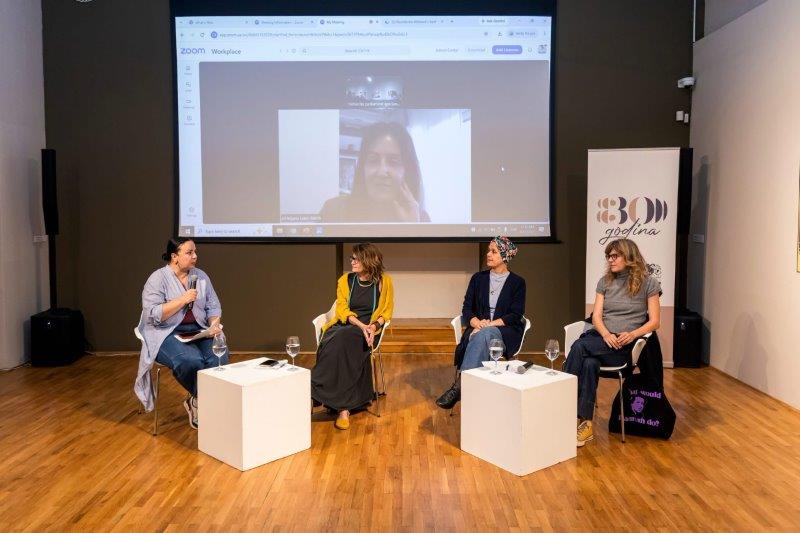
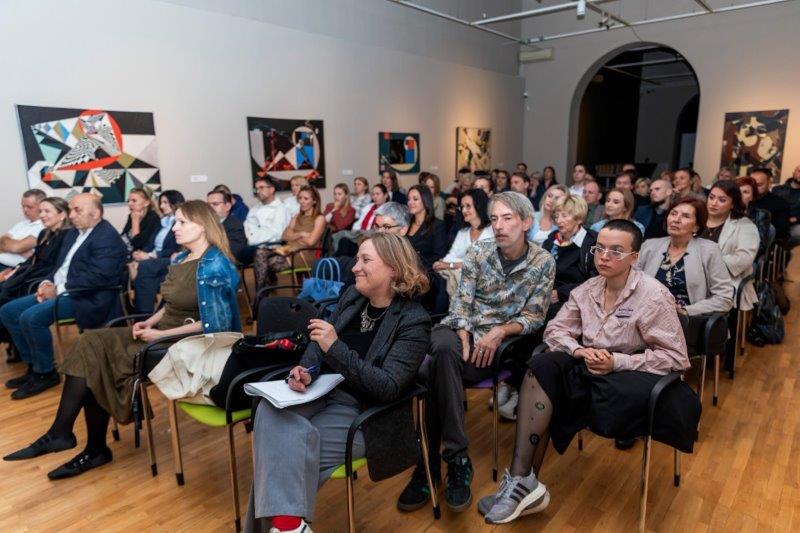
Formal representation of women does not necessarily mean that women have real political power. This was one of the key messages of the regional panel “Women’s Vision of the Future,” organized by the Helsinki Citizens’ Assembly Banja Luka on September 25, 2026, at the Museum of Contemporary Art of Republika Srpska in Banja Luka. The panel brought together Adriana Zaharijević from Serbia, Arijana Lekić-Fridrih from Croatia, Paula Petričević from Montenegro, and Zilka Spahić Šiljak from Bosnia and Herzegovina.
In the spirit of the feminist slogan “The personal is political,” the participants discussed elections, women’s political participation, European integration, resistance to conservative and anti-gender forces, and the possibilities for shaping a different political future.
One of the central questions was what it actually means to have women in politics. The number of women on candidate lists may create an impression of progress, while the distribution of real political power tells a different story. In the 2026 General Elections, out of 7,006 candidates, 2,958 were women, or 42.2 percent. However, women headed only 84 out of 542 candidate lists, or 15.5 percent, compared with approximately 22 percent in 2022.
As Zilka Spahić Šiljak emphasized, political power cannot be measured solely by the number of women on electoral lists. It is reflected in who is placed first on the list, who controls party resources, who receives media visibility, who negotiates coalition agreements, and who enters executive office after elections.
“We are faced with a paradox: women are considered good enough to fulfill the quota, but they are still not positioned often enough to exercise real power.”
For this reason, the question of women’s political participation cannot be reduced to the frequently repeated claim that “women do not vote for women.” Long before voters receive a ballot paper, political parties have already decided who will be first, second, or tenth on the list, who will receive campaign resources, and who will be politically visible. Gender equality is therefore also a question of democratizing political parties and redistributing power within them.
A particular challenge in Bosnia and Herzegovina is the persistent dominance of constitutional, national, and geopolitical issues in the political arena. In such a context, issues that directly shape everyday life, gender-based violence, labour and social rights, healthcare, childcare, maternity rights, and the care economy, can easily disappear behind so-called “big” political questions.
This led to one of the questions raised at the panel: who speaks about people’s lives, and who speaks only about the survival of the nation?
The panel also explored what the European perspective can bring to women in the countries of the region. Croatia’s experience shows that European integration can provide an important normative and institutional framework for improving legislation, equal treatment policies, and gender equality mechanisms. At the same time, formal alignment with European standards does not automatically translate into changes in women’s everyday lives.
The EU can help change laws, but it cannot change patriarchal culture by decree.
This is an important lesson for Bosnia and Herzegovina, Serbia, and Montenegro as well. The process of European integration can create space for stronger institutions, better protection against discrimination and gender-based violence, gender-responsive budgeting, and greater participation of women in decision-making processes. However, without political will, an active civil society, and women demanding a genuine redistribution of power, it is possible to have good laws and strategies while women’s lives remain largely unchanged.
The EU perspective should therefore be understood as a lever, not a magic wand.
“Europe can open the door, but we have to walk through it ourselves, ” concluded prof.dr. Zilka Spahić Šiljak.
