
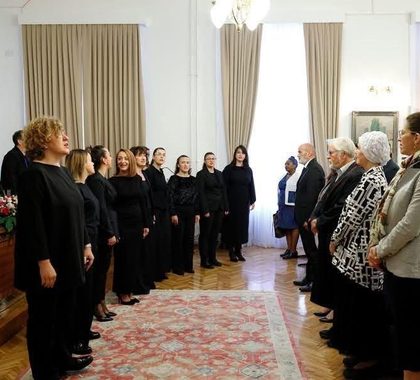
“Knowledge matters when we translate it into practice,” said Prof. Dr. Zilka Spahić Šiljak, Director of the TPO Foundation, on October 3, 2026, at the presentation of the ERMA Award for contribution to human rights, democracy, and peacebuilding. The recognition holds special significance for her, as she herself graduated from the ERMA programme in 2001, has been teaching in the programme for several years, and today addressed a new generation of students as an award laureate. Addressing this year’s generation of graduates, she reflected on completing her own studies in […]
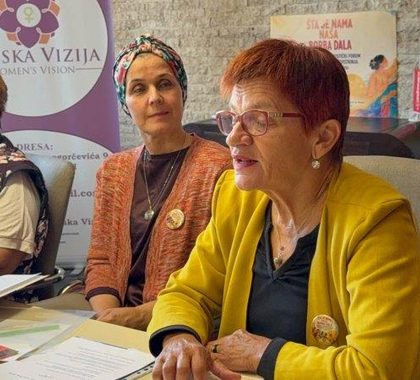
“It is not enough to see injustice – we must decide what we will do when we see it,” said Prof. Dr. Zilka Spahić Šiljak at the Regional Feminist Forum, held on October 2, 2026, in Tuzla and organized by the Women’s Vision Association. Speaking about her own activist journey, Spahić Šiljak recalled that her struggle did not begin in theory, but through direct encounters with women whose lives had been devastated by war, violence, and injustice. Those experiences taught her that knowledge cannot be separated from responsibility toward the[…]
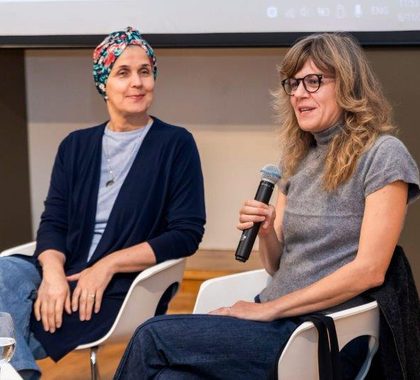
Formal representation of women does not necessarily mean that women have real political power. This was one of the key messages of the regional panel “Women’s Vision of the Future,” organized by the Helsinki Citizens’ Assembly Banja Luka on September 25, 2026, at the Museum of Contemporary Art of Republika Srpska in Banja Luka. The panel brought together Adriana Zaharijević from Serbia, Arijana Lekić-Fridrih from Croatia, Paula Petričević from Montenegro, and Zilka Spahić Šiljak from Bosnia and Herzegovina. In the spirit of the feminist slogan “The personal is political,” the[…]
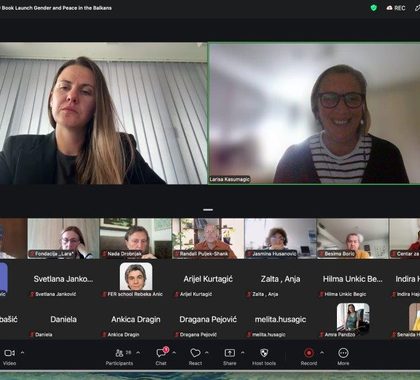
Peace is not something we achieve once and then simply possess. It is built every day through the way we speak, listen, remember, challenge injustice, and create space for others. This message marked the online promotion of the edited volume Gender and Peace in the Balkans: Sites of Challenges and Hopes, held on 23 September 2026, during the week commemorating the International Day of Peace. The event brought together Prof. Dr. Biljana Kašić, Prof. Dr. Larisa Kasumagić-Kafedžić, Prof. Dr. Zilka Spahić Šiljak, Dr. Randall Shank-Puljek, and Edita Miftari. The volume[…]
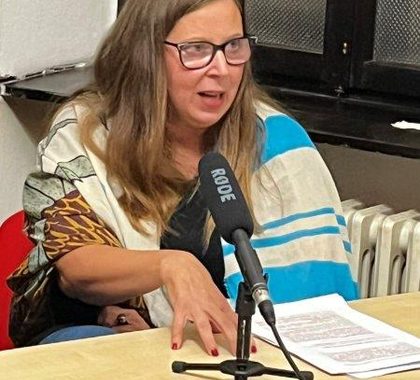
“If we accept that we are interdependent, then care is no longer merely a private or individual virtue,” said Prof. Dr. Anja Zalta, who was the guest speaker at the third roundtable held at the IMIC Zajedno Centre in Sarajevo on September 22, 2026. Moderated by Nikola Vučić, Prof. Zalta spoke about ecofeminism, different forms of resistance, and the need to rethink the relationship between humans, nature, and society. Speaking about various examples of resistance around the world, Prof. Dr. Zalta particularly highlighted struggles over seed governance, community feminism in[…]
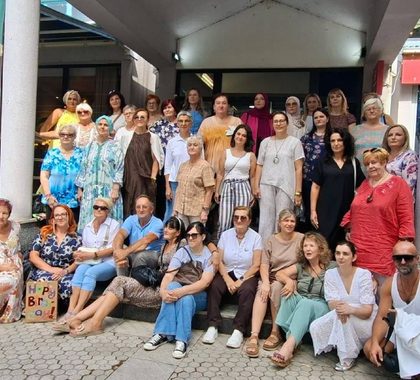
Li-Woman Women’s Association from Livno marked 30 years of existence and active engagement. To celebrate this important anniversary, a commemorative conference was held in Livno on 29 August 2026, bringing together members, associates, friends, and partners of the Association. Prof. Dr. Zilka Spahić Šiljak attended the event on behalf of the TPO Foundation. If three decades of Li-Woman’s work could be summed up in one word, that word would be empowerment. Over the past 30 years, through numerous projects, initiatives, and activities, Li-Woman has created spaces in which women could[…]
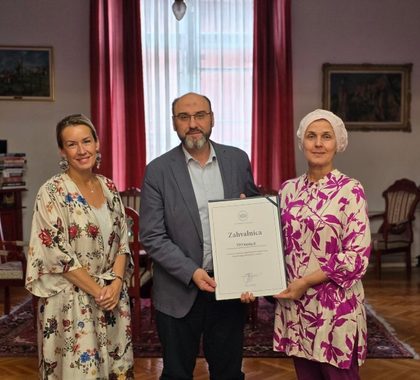
On 14 September 2026, the University of Sarajevo presented TPO Foundation with a Certificate of Appreciation for its contribution to the promotion of gender equality in higher education. The certificate was received on behalf of TPO Foundation by its Director, Prof. Dr. Zilka Spahić Šiljak, and presented by the Rector of the University of Sarajevo, Prof. Dr. Tarik Zaimović, and Vice-Rector Prof. Dr. Arma Tanović-Branković.
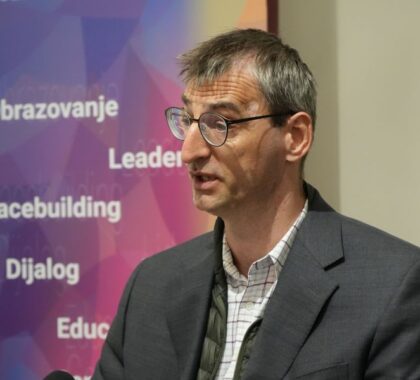
Feminist interreligious Islamic theology requires texts to be read contextually and resists reducing tradition to literal interpretations, Professor Adis Duderija emphasized in his lecture. The lecture was held on June 12, 2026, at the premises of SPKD Prosvjeta, organized by IMIC Zajedno, TPO Foundation, and the University Gender Resource Centre of the University of Sarajevo, and moderated by Nikola Vučić. Professor Duderija stressed that interreligious dialogue cannot remain merely at the level of courteous encounters and general messages of peace, but must include a serious engagement with the ways in[…]
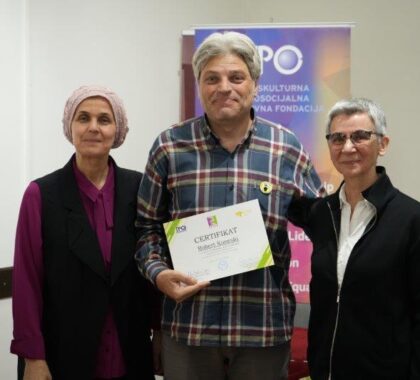
It is always better to offer an alternative than merely defend oneself against attacks, which is the principle promoted by the Feminism and Religion Online School, launched in 2021. The final event of the FER School for the academic year 2025/26 was held in Sarajevo on June 12, 2026, during which certificates were awarded to participants who successfully completed the program. The certificate ceremony took place after the two-day training “Introduction to Feminist Research Methodology,” and the directors of the FER School, Dr. Jadranka Rebeka Anić and Prof. Dr. Zilka[…]

Proceedings Gender and Peace in the Balkans: Sites of Challenges and Hopes is a collection of papers, peace testimonies and conversations that took place at the international conference on gender and peace held in Sarajevo in 2025. The Conference was part of the UNIGEM (Universities and Gender Mainstreaming) project implemented with 19 universities in the Balkans region. By exploring these feminist efforts for peace, the book raises important questions about feminist history, mem-ory, peacebuilding, and how these movements have dealt with nationalism, new state policies, and the rise of populism. […]

At the University of Sarajevo, a conference was held on March 9, 2026, marking International Women’s Day. Representatives of the academic community, judicial institutions, international organizations, and civil society warned that Bosnia and Herzegovina has a developed legal framework for the protection of women, but that the key problem remains its consistent implementation and the social tolerance toward various forms of violence. As part of the conference, Prof. Dr. Zilka Spahić Šiljak and Prof. Dr. Jasna Kovačević presented the UNIGEM project activities run by TPO Foundation over the past four[…]

On the occasion of March 8, International Women’s Day, an online panel was held on Friday, March 6, 2026, presenting key misconceptions about the legal and economic aspects of marriage. The panelists Ivana Radić, Amila Mujčinović, and Gorjana Mirčić Čaluković identified the problems but also offered recommendations for improving legal and economic literacy. The panel was moderated by Nikola Vučić. The TPO Foundation, the University Gender Resource Center (UNIGeRC), and the Gender Equality Council of the University of Sarajevo organized this panel to present regional perspectives on economic and legal[…]

Every human being is worthy of respect, violence against the innocent is a sin, and peace is a shared responsibility, these are the words with which the Interreligious Program held at IMIC Zajedno on February 27, 2026, began. The program and iftar were jointly organized by IMIC and the TPO Foundation, bringing together representatives of various religious and non-religious worldviews with the aim of promoting goodness, togetherness, love, solidarity, and justice. In the introduction to the program, Prof. Dr. Zilka Spahić Šiljak spoke about the importance of dialogue and creating[…]

The third day of the conference “Gender and Peace in the Balkans: Charting the Way Forward” was dedicated to systematizing knowledge, exploring feminist and intersectional approaches to memory politics, and defining guidelines for future action. Discussions clearly highlighted the power of women in peacebuilding and resistance to patriarchal narratives that seek to marginalize their role in reconciliation and transitional justice processes. Memory Politics and Lessons from the Past The panel “Memory Politics and Lessons from the Past” emphasized the need for gender-sensitive memory policies that recognize the contributions of women[…]

The second day of the conference “Gender and Peace in the Balkans: Charting the Way Forward,” organized by the TPO Foundation, provided powerful insights into various forms of resistance to patriarchy, heteronormativity, and populism through literature, art, and activism. Panelists discussed the power of language, artistic expression, and feminist peace engagement in shaping social change. Literary and Artistic Resistance to Patriarchy and Heteronormativity Edisa Gazetić’s presentation highlighted how regressive tendencies manifest through anti-gender ideologies on social media and in public discourse. She specifically analyzed the phenomenon of young influencers advocating[…]

Author: Mirsad Ovčina In Bosnia and Herzegovina, 12 women were killed last year. The victims of femicide are mostly women who had endured prolonged domestic or partner violence, often previously reported to the competent authorities. The most recent case to shock the Bosnian public was the murder of Inela Selimović and her thirteen-year-old son in Kalesija, carried out in a cruel manner – by strangulation and suffocation – by her husband and the boy’s father, Emir Selimović. Prof. Dr Zilka Spahić-Šiljak, a doctor of science of gender studies, director of the[…]

“Why is ‘every journey better than staying in the inn’?” – the answer lies in the need for a more active and visible feminist engagement to counter anti-gender movements, panelists agreed at the conclusion of the first day of the conference Gender and Peace in the Balkans: Charting the Way Forward. The first day of the conference was marked by dynamic discussions on contemporary challenges to gender equality, the militarization of society, and feminist resistance. The conference was opened by Prof. Dr. Zilka Spahić Šiljak, Director of the TPO Foundation,[…]

With the support of the TPO Foundation and UNIGEM, on December 3, 2025, Dr Slađana Stamenković delivered a lecture titled Women Who Wander: Flâneuse in Anglophone Literature at the Faculty of Philosophy of the University of Novi Sad. The concept of the urban walker, stroller, or wanderer – known as the flâneur – became established in literary history as early as the nineteenth century (when it was first popularized in France and subsequently across Europe and Western civilization). More recently, literary theory has turned its attention to the female version[…]
